The Age of the Itinerant Professional

White collar professional employees in the U.S. have become itinerant workers over the past 20 years. We would typically use this term in relation to seasonal workers like fruit pickers, construction workers or ski instructors, someone who travels from place to place to find work, typically for short periods. These workers seldom have a permanent residence and move frequently to follow job opportunities. Does this sound familiar? Can you relate?
In working with my clients, it’s not unusual to find high tenure employees on the cusp of retirement mixed with lower tenure staff. The higher the tenure the higher the competency in their role and more innovative response to business challenges.
A variety of factors have prompted the rise of these itinerants:
- Decreasing Median Tenure: Over the past two decades, the median tenure for white-collar workers has remained relatively low, around 4.1 years. Let’s break this down and estimate it takes about 9 months to get integrated into the new organization and around 6 months to find a new job which leaves real effective tenure at 2.5 years.
- Increased Job Mobility: The labor market has seen significant changes, with more opportunities and a higher rate of job switching. Economic conditions, such as the strong labor market in recent years, have encouraged employees to seek better opportunities, leading to shorter tenures.
- Changing Career Expectations: Modern professionals often prioritize career growth, skill development, and work-life balance over long-term loyalty to a single employer. This shift in career expectations has contributed to more frequent job changes as employees seek roles that better align with their personal and professional goals
- Impact of Technology and Remote Work: Advances in technology and the rise of remote work have made it easier for employees to transition between jobs and even industries. This flexibility has reduced the barriers to job mobility, allowing white-collar workers to explore new opportunities more readily.
- Economic and Industry Shifts: Economic downturns, such as the 2008 financial crisis and the COVID-19 pandemic, have led to layoffs and restructuring in many industries. These events have forced many professionals to change jobs more frequently, contributing to the perception of white-collar workers as itinerant.
This itinerant trend of white-collar professionals frequently changing jobs has several negative impacts:
- Career Development Challenges: Employees who frequently change jobs find it harder to develop deep expertise in a particular area. Research suggests that to reach mastery in a competency 20,000 hours are required. Average tenure of 4.1 years in a role is less than half those hours. This can impact their long-term career growth and advancement opportunities.
- Weak Job Security: Frequent job changes can lead to a sense of instability and insecurity among employees. This can be particularly stressful during economic downturns or periods of organizational change.
- Reduced Employee Loyalty: Companies may struggle to build a loyal workforce. High turnover rates can disrupt team cohesion and make it difficult to maintain a consistent corporate culture.
- Increased Recruitment and Training Costs: Organizations may face higher costs associated with recruiting and training new employees. This can also lead to a loss of institutional knowledge and expertise.
- Impact on Mental Health: Constantly adapting to new roles, environments, and expectations can lead to increased stress and burnout. The pressure to continuously prove oneself in new positions can be mentally taxing.
- Disruption of Work-Life Balance: Frequent job changes can disrupt personal lives, making it harder to establish a stable work-life balance. This can affect overall well-being and job satisfaction.
These downsides highlight the importance of finding a balance between job mobility and stability to ensure both employee well-being and organizational effectiveness.
It’s not easy to please the itinerant professional. However, there are a few tips to reduce job hopping and increase retention in your organization.
Table Stakes:
- Positive Work Environment: Foster a supportive workplace culture where employees feel valued and respected. This can enhance job satisfaction and loyalty.
- Competitive Pay and Perks: Ensure that salaries and benefits are competitive within the industry. This includes health benefits, retirement plans, and other perks that can make employees feel more secure and appreciated.
- Employee Engagement: Regularly seek feedback from employees and involve them in decision-making processes. Engaged employees are more likely to feel connected to the company and less likely to leave.
Big Bets:
- Hire the Right Fit: During the recruitment process, look for candidates who align with the company’s values and culture. Employees who feel a strong connection to the company’s mission are more likely to stay long-term.
- Invest in Employees: Invest in employees’ growth by offering training programs, workshops, and opportunities for career advancement. This helps employees feel that they are progressing in their careers and gaining valuable skills.
- Employee Retention Programs: Develop programs that recognize and reward long-term employees. This could include bonuses, additional vacation days, or other incentives for staying with the company.
- Promote Work-Life Balance: Promote policies that support a healthy work-life balance, such as flexible working hours, remote work options, and adequate paid time off. This can reduce burnout and increase job satisfaction.
Employees often move on when they feel underappreciated, bored by the work or unhappy with their direct leadership.
Take a moment and evaluate what it would take to keep you at a business for 7 years or more.
Wisdom versus Knowledge in the Age of AI

So, I live near a college campus. Over the past week, the traffic has gone from zero to absolute chaos, thanks to all the teenage drivers. It got me thinking about all these college students starting a new semester in what we call the Information Age. The goal? To gain knowledge and maybe, just maybe, gather a bit of wisdom. But here’s the thing: “knowledge” and “wisdom” are not the same, even though people often mix them up.
Knowledge is all about collecting facts, data, and information. It’s what you get from education, research, and experience. You can measure it, and it’s easy to pass on through books, teaching, or the internet. For example, knowing that the Earth orbits the Sun, understanding math principles, or being aware of historical events – that’s all knowledge. And in today’s world, getting knowledge is easier than ever. Just Google it, and boom, you’ve got more information than you know what to do with.
Wisdom, on the other hand, is about making good judgments and decisions based on that knowledge, experience, and a bit of insight. It’s a deeper understanding of life and human nature. Wisdom isn’t just about knowing facts; it’s about understanding the bigger picture and the implications of those facts. It’s about figuring out what’s true, right, and lasting. For example, knowledge can tell you how to build a bridge, but wisdom will make you consider the environmental impact, the community’s needs, and the ethical implications.
In the Information Age, the difference between knowledge and wisdom is more important than ever. With so much information out there, the challenge isn’t just getting knowledge but figuring out what’s relevant, accurate, and useful. That’s where wisdom comes in. Wisdom helps you cut through the noise, focus on what’s important, and use knowledge in ways that are beneficial and ethical.
Wisdom also involves emotional intelligence, empathy, and seeing things from different perspectives. It requires a balance of analytical thinking and intuition. While you can get knowledge pretty quickly, wisdom takes time. It comes from reflecting on your experiences and learning from both your successes and failures.
In the workplace, the difference between knowledge and wisdom is clear. A data analyst might have tons of knowledge about data science, but a seasoned manager uses wisdom to make strategic decisions that consider the long-term impact on the organization and its people. In personal life, knowledge might help you understand how to live healthily, but wisdom guides you in making choices that lead to overall well-being and fulfillment.
While knowledge and wisdom are connected, they’re not the same. Knowledge is about getting information, while wisdom is about using that information wisely. In the Information Age, where data is everywhere, wisdom is invaluable. It’s what helps us navigate life’s complexities, make ethical decisions, and contribute meaningfully to society.
Someone once told me that “wisdom and experience beats youth and enthusiasm every day”
Mission Statements: Fluff or Meat
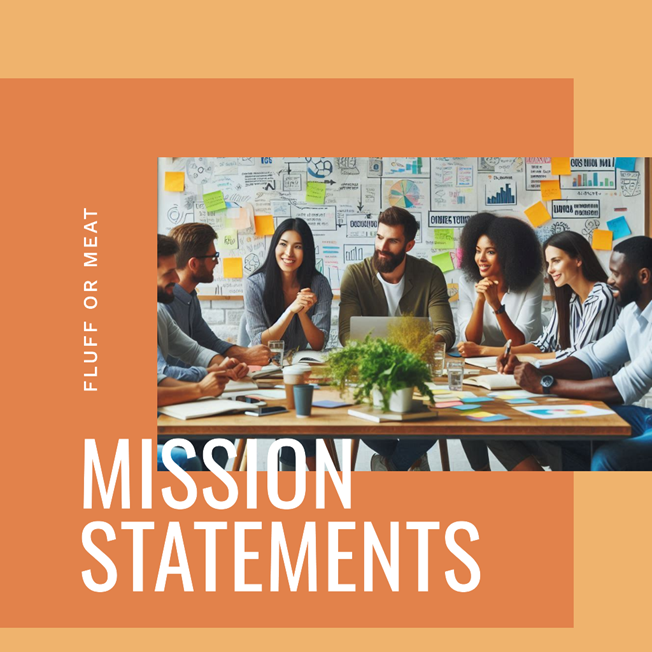
Many studies about hiring and employee retention highlight that Millennials, and GenZ folks want a mission-oriented place to work. Do mission statements deliver? Developing mission statements has been a thing for me since the 1980’s. Do they really matter? Studies show that a significant majority of companies have formal mission statements. For instance, up to 85% of Western profit-oriented companies have their missions written in a statement form. In specific studies, such as one involving Fortune 500 companies, nearly all of them have published mission statements.
Similarity Between Mission Statements
Everyone thinks their mission statement is unique. But there not. Research indicates that many companies use similar components and themes. Common elements include a focus on customer satisfaction, innovation, and social responsibility. For example, a comparative analysis of mission statements from Chinese and American companies found that while there are cultural differences, the core themes often overlap.
In summary, most companies have mission statements, and while they may vary in wording and emphasis, many share common themes and components. It’s like everyone copying each other’s homework but changing it just enough to avoid getting caught.
Stability of Mission Statements
Mission statements aren’t exactly like your favorite pair of socks that you change every day. They tend to be more stable. Generally, companies don’t modify their mission statements frequently unless there’s a significant shift in their business focus or strategy.
However, as companies evolve, they might tweak their mission statements to reflect new goals or expanded audiences. It’s like updating your social media bio when you get a new job or hobby – you keep the core but add a bit more flair.
The Fallacy of Mission Statements Driving Business Decisions
Mission statements are often hailed as the guiding stars of organizations, encapsulating their purpose, values, and direction in a few succinct sentences. However, the belief that mission statements alone can drive business decisions is a fallacy that many companies fall prey to.
The Illusion of Clarity and Direction
Mission statements are designed to provide clarity and direction. They are meant to align the organization’s efforts and ensure everyone is working towards the same goals. One purpose, one driving mission. However, the reality is that many mission statements are so broad and generic that they fail to offer any real guidance. Phrases like “to be the best” or “to deliver value to our customers” are so vague that they can be interpreted in countless ways, leading to confusion rather than clarity.
The Disconnect Between Words and Actions
One of the biggest issues with relying on mission statements to drive business decisions is the disconnect between what is written and what is done. It’s easy to craft a compelling mission statement, but much harder to live by it. Companies often find themselves making decisions that contradict their stated mission because of market pressures, financial constraints, or other practical considerations. This disconnect can erode trust and credibility both internally and externally.
The Static Nature of Mission Statements
Business environments are dynamic and constantly changing. What made sense as a mission statement five years ago might not be relevant today. However, mission statements are often static, rarely updated to reflect new realities. This rigidity can hinder a company’s ability to adapt and innovate. When decisions are made based on an outdated mission statement, they can lead to missed opportunities and strategic missteps.
The Overemphasis on Mission Statements
Another fallacy is the overemphasis on mission statements at the expense of other critical elements like strategy, culture, and execution. A mission statement is just one piece of the puzzle. Without a clear strategy to achieve the mission, a supportive culture to foster the right behaviors, and effective execution to bring plans to life, a mission statement is nothing more than empty words. Companies that focus too much on their mission statement often neglect these other crucial aspects, leading to poor decision-making and subpar performance.
The Role of Leadership
Effective leadership is essential for translating a mission statement into meaningful action. Leaders must embody the mission in their decisions and behaviors, setting an example for the rest of the organization. However, when leaders fail to do this, the mission statement loses its power and becomes just another piece of corporate jargon. Leadership that is disconnected from the mission statement can lead to decisions that are misaligned with the organization’s stated purpose and values.
Mission Statement Audit
- Read your company’s mission statement.
- Ask your colleagues and associates to recite the mission statement
- Determine the percentage of correct or even directionally correct answers to the request.
- If the percentage is low, your business doesn’t really have a mission statement and proceed to step 4
- If the percentage is high, Congratulations!! STOP HERE
- Evaluate the mission statement for relevance to the present state and the future goals of the business
- Initiate a rewrite process inclusive of executives, mid-level and operational associates.
- Execute an updated Mission Statement Launch program
Mission statements play a valuable role in articulating an organization’s purpose and aspirations, they are not a panacea for driving business decisions. The fallacy lies in believing that a well-crafted mission statement alone can guide an organization to success. To truly drive business decisions, companies need to ensure that their mission statements are clear, actionable, and aligned with their strategies, culture, and leadership.
Mission Statement Examples:
- Google: “To organize the world’s information and make it universally accessible and useful.”
- Tesla: “To accelerate the world’s transition to sustainable energy.”
- Nike: “To bring inspiration and innovation to every athlete in the world.”
- Microsoft: “To empower every person and every organization on the planet to achieve more.”
Go for it! Audit your mission statement today!!
Standards Build Value

Who needs standards? Just get the job done. Right? Although that’s an interesting perspective the truth is that in the chaotic world of business, standards are like unsung heroes, quietly ensuring everything runs smoothly. They might not get the spotlight, but without them, we’d be in a right mess. Let’s dive into why standards are so crucial for businesses.
Consistency and Quality
First off, standards bring consistency. Imagine if every iPhone was unique depending on which store you visited. If every visit to your favorite coffee store brand offered a different set of menu options and payment types the world would come to an end. Standards ensure that products and services meet a certain level of quality, no matter where or when they’re delivered. This consistency builds trust with customers, who know they can rely on getting the same experience every time1.
Efficiency and Productivity
Standards streamline processes, making operations more efficient. When everyone knows the same leading practices and follows the same procedures, it reduces errors and saves time. For instance, in manufacturing, adhering to standards can minimize waste and improve productivity. It’s like having a well-oiled machine where every part knows its role and performs it flawlessly2.
Safety and Compliance
In industries like healthcare, construction, and food production, standards are vital for safety. They ensure that products and services are safe for consumers and that workplaces are safe for employees. Compliance with standards can also protect businesses from legal issues and fines. It’s not just about ticking boxes; it’s about safeguarding lives and reputations3.
Innovation and Market Access
Many believe that innovation is a result of wild brainstorming sessions in a hut in the Mojave Desert. Yet that’s the furthest from reality. Standards drive innovation by providing a clear framework within which organizations can develop new products and services. They can also open new markets. For example, if a product meets international standards, it can be sold in multiple countries without needing to be modified. A piece of software that operates on multiple platforms can be offered across multiple devices. This can significantly expand a company’s market reach and revenue potential3.
Customer Satisfaction
When businesses adhere to standards, it leads to higher customer satisfaction. During my work with clients across industries at J.D. Power we found that process consistency was crucial to building trust with customers. Customers appreciate knowing that they are getting a product or service that meets their expectations. This satisfaction can lead to repeat business and positive word-of-mouth, which are invaluable for growth1.
Competitive Advantage
Companies that consistently meet or exceed standards can differentiate themselves from competitors. This can be a significant competitive advantage, especially in crowded markets. It signals to customers that the company is reliable and committed to quality2.
Employee Morale and Performance
Standards also play a crucial role in employee morale and performance. Clear standards and guidelines help employees understand their roles and responsibilities, reducing confusion and frustration. This clarity can lead to higher job satisfaction and better performance. When employees know what’s expected of them and have the tools to meet those expectations, they’re more likely to be engaged and productive1.
Driving Value Though Consistency
Standards are the backbone of successful businesses. They ensure consistency, improve efficiency, enhance safety, drive innovation, and boost customer satisfaction. They also provide a competitive edge and improve employee morale. While they might not be the most glamorous aspect of business, their value is undeniable. So, next time you enjoy a perfectly made burger or receive excellent customer service, remember that standards are working behind the scenes to make it happen.
Standards might not make headlines, but they make businesses better and build value. And in the end, that’s what really counts.1: Organizational Standards Examples 2: 9 Steps to Create Company Management Standards 3
Post Merger Disintegration – Don’t Let This Happen to You

Mergers and acquisitions are always atop the list of tactics to grow a business. Unfortunately, most fail to achieve the desired outcome. Mergers and acquisitions (M&A) have a high failure rate. According to various studies, between 70% and 90% of mergers fail to achieve their intended goals. This high failure rate is often attributed to challenges in post-merger integration, cultural clashes, and operational difficulties. In my experience of being involved in M&A as both a participant and consultant I can attest that even with a stratospheric level of planning and engagement most mergers disintegrate within a few years.
The real challenge in M&A is the complexity that comes with blending cultures, operational processes and humans. In every M&A both sides of the transaction feel a sense of loss at the operational level. Senior executives jump for joy at completing a difficult process, but at the level where work is done the sense of fear, dread and uncertainty permeates both sides of the transaction.
Millions of words have been written about M&A so there’s no magic wand to creating accretive value from a business combination. My goal in working with clients engaged in a combination is to highlight the hot spots while mitigating the evident failure risks.
Strategy Integration
Transactions are always secretive and highly compartmentalized during the diligence dance. The focus is on how to get the deal done. Once the deal is consummated the combination work begins. In the words of Steven Covey “begin with the end in mind” meaning that the merged entity’s strategic goals are aligned for long-term success. You must get this right. Again, no magic here, just the hard work of building a vision and clear strategic objectives that integrate the strategic plans of both companies.
Once the vision and strategy are determined through a collaborative process inclusive of both business leadership teams, communicating that vision clearly and honestly will build the foundation to achieving the goals. A strong foundation is a launching pad, a weak foundation will sink at the first hint of a storm.
Cultural Integration
Culture can best be defined by a common language, common artifacts and common rituals. A massive Post Merger Integration (PMI) challenge is to either blend the cultures or adopt the strongest culture of the combination. Bringing together different corporate cultures can lead to conflicts and misunderstandings when the work of establishing a common language is incomplete. When I talk about a common language it means a common set of financial and operating metric definitions, common roles and titles and clarity of business process standards. Employees from both organizations will have different ways of working, communication styles, and values. If these cultural differences are not addressed, they can lead to decreased employee morale, reduced productivity, and even the loss of key talent. Effective cultural integration demands clear communication, leadership commitment, and initiatives that promote a unified corporate culture.
During my engagement with the PriceWaterhouse and Coopers and Lybrand merger we established a leadership engagement program that brought Partners from both firms together in workshops globally. Our goal was to have conversations that included every leader in both firms to build a common language, understand the strategic objectives and discuss difficult issues in a safe environment. These firms were of wildly different cultures and the leadership level working groups assisted in a smooth transition to an new firm, PriceWaterhouseCoopers (PWC).
Integration vs. Disintegration
Successful M&A transactions build accretive value for external shareholders and stakeholders in the business. Taking proactive steps to ensure clarity of strategic goals and development of a common culture is crucial. Financial and operational integration may take three to five years to fully complete. Early days should focus on direction setting and human engagement. Ultimately, the success of PMI depends on the ability of the merging companies to work together towards a common goal and realize the anticipated benefits of the merger.
Style Over Substance: Declining Commitment to Excellence

Alright, let’s dive into this, shall we? In the good ol’ US of A, we’ve got a bit of a problem. It’s like we’ve all become magpies, obsessed with shiny things. Style has overtaken substance, and it’s everywhere—from politics to social media, and even in the corporate world. It’s like we’re living in a giant Instagram feed, where everything looks perfect but is as deep as a puddle. We live in a world of green screen backgrounds where projection of reality can be anything but real.
Corporate Culture: The Brand Over the Product
In the business world, it’s all about branding. Companies spend millions on creating a polished image, sometimes at the expense of product quality. It’s like putting lipstick on a pig and calling it a supermodel. The rise of “brand influencers” means that looking good is more important than being good. Employees are encouraged to prioritize appearance over performance. It’s like being in a beauty pageant, but with spreadsheets
Politics: The Circus Act
Remember when politicians used to be judged by their policies? Yeah, me neither. Now, it’s all about who can come up with the catchiest slogan or the most viral moment. It’s like watching a reality TV show, but with higher stakes. Politicians are more concerned with their X, Tic Toc and Instagram followers than actual governance. It’s all about the soundbite, not the substance. Imagine if Churchill had to deal with this— “We shall fight them on the beaches… but first, let me take a selfie.”
Social Media: The Land of Make-Believe
Social media, the great equalizer. Or should I say, the great faker? Influencers and celebrities have massive followings based on their curated lives. It’s all about the perfect shot, the perfect angle. Substance? Who needs it when you’ve got filters? The pressure to maintain this facade is immense. It’s like living in a soap opera, but with worse acting. The most visually appealing content gets the most attention, regardless of its actual value. It’s like giving an Oscar to a YouTube cat video.
The Fallout
So, what’s the result of all this? A superficial society where appearances are everything. Trust and integrity take a backseat to image. People are more concerned with how they’re perceived than who they really are. It’s like living in a world of mannequins, all style, no substance. Personal excellence in competency is overcome with style. The ability to get stuff done is overtaken by the appearance that something happened, all smoke and mirrors.
The Way Forward
Look, style isn’t inherently bad. But it shouldn’t come at the expense of substance. We need to find a balance. Value content and authenticity over appearance. Let’s create a culture that values depth and integrity. Otherwise, we’re just a bunch of well-dressed mannequins, pretending to be real. In the business world, focus on real value creation instead of the prettiest website. Build a place where execution and competence overshadows the shiny objects.
So, what do you think? Has the emphasis on style improved or harmed the overall experience of work and life in general?
TOP 5 MOST IRRELEVANT BUSINESS METRICS

Metrics, metrics, metrics there are so many business metrics in the world today that most of them have little or no relevance. Sometimes I think business gurus stay awake at night concocting a new metric, so they have something new to talk about or sell to clients.
Making decisions based on numbers a.k.a. metrics the numbers need to be relevant, meaningful and actionable. Here are a my Top 5 most irrelevant numbers that businesses collect:
Number 5- Customer Satisfaction (CSAT)Scores: You would think that CSAT scores are the most valuable number any business can collect. They are highly subjective and bias laden. The results of these scores seldom reflect actual customer behavior but more a snapshot perception of a specific interaction with a product or service. Using CSAT or Net Promoter Scores (NPS) alone provides minimal insights into customer behavior or advocacy. Understanding customer needs, perceptions, and behaviors require a combination of hard metrics like customer retention and share of wallet, average order value (AOV), Customer Lifetime Value (CLV) along with softer metrics like CSAT, NPS, Customer Effort Score (CES) and the most valuable piece of data, unstructured feedback like product reviews, complaints and praises. A holistic approach to understanding customer behavior offers far more value than a single CSAT, CES or NPS number.
Number 4-Gross Revenue: Gross revenue is a totally meaningless number. Focusing on gross revenue without considering costs is highly misleading. Top line revenue without taking into account the costs required to achieve that revenue can lead to complete misunderstanding the health of the business. Insights into the business that are actionable financial metrics should include all costs associated with the gross revenue. Getting to the core of understanding business health requires metrics that reflect net values. Examples include net income and net profit margin that reflect both the incoming revenue stream and outgoing costs.
Number 3-Vanity Metrics: Vanity metrics are interesting but often totally irrelevant to business decisions. Vanity metrics include social media followers, page view or app downloads. While they might look impressive or depressing, depending on the numbers, they don’t necessarily connect with business success or profitability. Some would argue these vanity metrics have value for understanding the success of marketing efforts. I would argue that a more valuable and actionable metric is Return on Marketing Investment (ROMI). ROMI requires a bit of work to calculate because it focuses on the profits of incremental sales attributed to marketing activity like social media, page views, promotions and campaigns. It can be calculated uniquely for each marketing or advertising channel providing insights into the value creation of marketing activities in each channel.
Number 2-Customer Count: Focusing on the gross number of customers doesn’t tell you much about your business. It doesn’t reflect the value of those customers, their behaviors, retention or loyalty. There is no insight with this metric, it’s just a number. Insights leading to action comes form hard metrics that reflect the value of your customer base through understanding segmentation of that customer base, retention of customers, customer lifetime value (CLV) or in B2B scenarios average revenue per account (ARPA). In today’s business world customers move and shake like an 8.0 earthquake. Rely on the data beneath the customer count to make decisions that create value for the business and the customer.
Number 1 – Employee Hours Worked: Not many businesses use this metric but for those that still see value in knowing how many hours employees put on a timecard it’s time to wake up. Simply tracking hours worked doesn’t account for productivity, competency or efficiency. Unless your business relies on timesheets for billing customers to generate revenue hours worked is the top irrelevant metric in history. Focus on output and results to truly measure employee performance. Revenue per employee provides a read on the entire workforce. The more revenue per employee, the more productive is and the more likely its efficiently using resources.
Metrics drive insights that drive action. Use that valuable real estate on an executive dashboard for meaningful metrics that provide a snapshot of business health.
Self Service Off the Rails
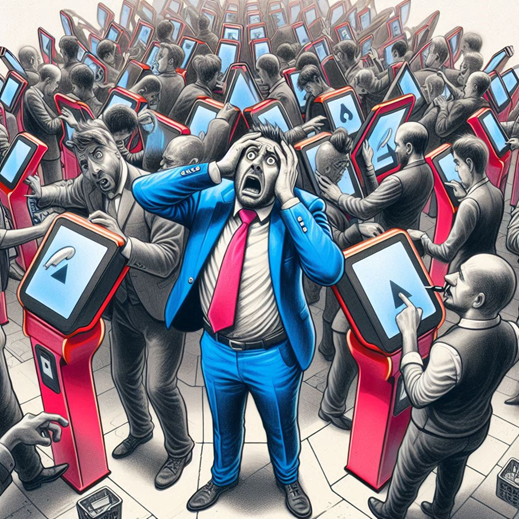
Yesterday I spent 2 hours climbing in my attic, crawling under sinks and behind toilets in service to my insurance company. Seriously? Apparently to save money my outrageously expensive insurance company decided that I should conduct my own self-inspection using a really shitty app providing them access to the perils of my toilet connections.
This is a version of self-service that is off the rails, out of bounds and an affront to the value I get from any insurance company. By the way, in over 4 decades of paying tens of thousands of dollars for homeowners’ insurance I have never filed a single claim, not one. The reward, go ahead and spend your time doing our job.
If this sounds like a rant, it’s because I’m angry and disappointed in how far businesses have taken self-service. Apparently, today’s business just provides a “thing” whether it’s a product or service they take no responsibility for actually serving their customers. Your app not working, try finding a human to help. Car breaks down and need a tow, you better have signal coverage and the app installed. I think you get the drift here. This all started when we began pumping our own fuel at service stations and has gotten wildly out of control.
I take some responsibility for these practices as a customer experience expert advising clients on how to both be efficient and customer focused simultaneously. Self-service is a tool in the bag but shouldn’t be the only tool.
I’m quite sick of having to download an app for everything in my life. From coffee shops to banking to utilities the world has gone application crazy. Data is the true commodity that every business is selling today, the insatiable appetite for more data has destroyed customer service. The thirst for personalizing every offer through the endless number of apps. On average we have about 35-40 apps installed on our smartphones. That means we carry between 35 and 40 cards in our wallet to conduct daily life. Imagine the size of your wallet. But since these cards are virtual and have no physical footprint, we don’t care, it’s just another icon on a screen.
I hope my point is clear, if a business wants to differentiate itself in a wildly competitive market take a stand and care for your customers with real-time support for your product and service. Self-service or Level Zero support is important for the mundane like password resets but don’t put customers into an endless loop of time wasting to access Level 1,2, and 3 support. Your customer’s time is just as valuable as your time, even more valuable as they pay your bills. Understand that one simple concept and you can differentiate.
Paranoia: The Foundation of Business Agility

North American Aircraft (NAA)produced around 42,000 aircraft during World War II that included the iconic P-51 Mustang and B-25 Mitchell bomber. employing over 90,000. At the conclusion of the war effort then company president James “Dutch” Kindelberger had a business problem. What do we do now? The P-51 and B-25 lines were shut down. He put his executives to work to build a new, innovative business. The results were astonishing with NAA developing the F-86 Sabre, the first military jet as well as other jet aircraft based off the Sabre technology.
I tell this story only to illustrate how quickly a business model can experience dramatic change overnight. I had the honor to work at NAA for several years following the end of the Cold War when a similar dramatic transition occurred. We would often raise Dutch as the model for embarking on a new, innovative era following the B-1 Lancer and Space Shuttle contracts expiration.
Are you prepared to adapt at a moment’s notice? Do you have agility built into your business model and organization? Can you adapt or will you die?
Business agility is crucial for organizations to respond to market changes and emerging opportunities quickly and effectively. Dutch Kindelberger was a leader that made change happen at NAA through his hands-on style and a strong focus on innovation and efficiency.
Here are the key components that make up business agility:
- Leadership: Agile leadership focuses on communication, collaboration, and commitment. Leaders develop others as leaders and work towards a shared purpose1.
- Governance: Effective governance ensures that decision-making processes are flexible and responsive to change. It involves setting clear guidelines and frameworks that allow for quick adaptation1.
- People: The workforce must be skilled, adaptable, and empowered to make decisions. Continuous learning and development are essential to maintain agility1.
- Culture: An agile culture promotes innovation, risk-taking, and a willingness to adapt. It encourages a mindset that embraces change and values continuous improvement1.
- Strategy: Agile strategies are dynamic and flexible, allowing organizations to pivot quickly in response to new opportunities or threats. This involves regular reassessment and adjustment of strategic goals1.
It’s easy to lay out the pieces required for business agility and the challenges to pull it off are numerous. Everything from our old friend resistance to change to the mechanics of having flexible processes.
In my experience, agile organizations are always in a state of change. Every planning cycle promotes investment in innovation. Andy Grove, the former president, and CEO of Intel, was famously known for the mantra, “only the paranoid survive.” Being paranoid isn’t a bad thing, it keeps us looking forward, not accepting the status quo as lasting forever.
A couple of tips to think about:
1. Always have an eye beyond the next 24 months. Look beyond the end of your desk calendar for possible disruptions and innovations.
2. Take succession planning seriously. Succession planning is not just for the most senior leaders in the business, it’s a process that should evaluate talent at all levels of the organization for either new opportunities or skill building.
3. Be honest and accountable. Be honest with yourself about the state of your business model and accountable for goal achievement. Don’t allow yourself to get comfortable or complacent.
4. Make changes in the business part of the business. Change is the only constant in life, make it part of doing business every day. Changes may be small but making it a norm in the culture will pay dividends.
Be paranoid…in a good way!
Customer Focused Change…Do it!

Nearly every survey done over the past 30-some-odd years asking about why large scale technology or process improvement projects fail indicates a weakness in change management. Hmmm..Isn’t that interesting. A recurring failure point. Why? Why is managing change such a challenge? In my mind and experience the answer is quite simple. A weak connection to the change’s impact on customers.
Every process improvement guru focuses on understanding customer wants, needs and perceptions before embarking on any business intervention. Improve efficiency, implement new technologies, bring a new product to market, change pricing and packaging, you name the change it should always be underpinned by driving customer retention and/or acquisition. Yet, when I walk into a client situation and ask a simple question about customer metrics the change will impact, I get blank stares. When I ask a Six Sigma Black Belt what the CTQ’s (Critical to Quality) are that made this effort important I get the same result, a thousand-mile stare. And we wonder why employees don’t adopt new practices or technology.
In my earliest interactions with any client the customer is always a topic. How will this change impact the customer’s wants, needs and perceptions? Will it make you easier to do business with? Will your employees be engaged with the change because they know how it will affect customer satisfaction? Very few clients can answer these questions. Very few consultants working on the change can answer these questions. Hence, all the communication and training in the world won’t make adoption happen or the change stick.
CUSTOMER FOCUSED CHANGE: A PRIMER
DEFINITION: Customer-focused change is a strategic approach where businesses prioritize the needs and experiences of their customers in every aspect of their operations. This involves a shift from product-centric to customer-centric thinking, where the ultimate goal is to enhance customer satisfaction, loyalty, and advocacy.
Imagine!! Putting the folks that pay the bills at the center of the universe. What a strange concept.
A FEW TIPS
Here are some tips on exercising customer-focused change:
Understand Customer Needs: Understand clearly the wants, needs and perceptions of your customers.
Align with Customer Success: If you want a sticky change align your success with that of your customers, ensuring that all facets of the change prioritize the impact on customer wants, needs and perceptions. Don’t be fooled by thinking you know what the impact will be, know if well enough to measure against.
One of my favorite stories is about a client I worked with to improve their ease of doing business by implementing a new ERP solution. On a customer visit we asked what would make their experience better with the client. The answer was both hilarious and sad. “If we knew before the FedEx truck drove past the dock we weren’t getting our shipment today.” That’s big. We turned that story into a primary message for the change. Making sure the investment in time and money wasn’t focused on just hitting a go-live date but on giving that customer and others transparency to their order status.
Prioritize Customer Feedback: Take all customer feedback seriously. Make decisions with that feedback in mind. One of my clients painted on the wall of their main conference room these words: “How will this impact our customers?” At every meeting about the change project the leadership team would point to that question when being asked to decide on a modification to the project.
Operationalize Customer Empathy: Make it real! Implement practices that operationalize empathy towards customers. Add technology where appropriate to aid in understanding and meeting their needs more effectively. Change should not be just about reducing costs, which it often is, but about reducing operating costs while improving the customer experience.
Engage Employees: Link the change message internally to customer outcomes. Employees really do care about their customers, they want to know how this change will make customers more loyal to the brand and keep their jobs safe.
Exercising customer-focused change, may require businesses to adjust change strategies, processes, and even their organizational structure to ensure that customer needs are at the forefront of decision-making.
Put customers at the center of any change and watch the success rate of adoption increase dramatically.
About The Change Dude
Outside the blogoshpere I’m Bob Caruso, a professional change artist/Managing Partner at Orchid Black.

Most people don’t particulary like when things around them are constantly challenging their ability to walk in a straight line. I, on the other hand, love it when the status quo was 10 minutes ago. Over the past 30 years I’ve been assisting people and organizations reinvent, reinvigorate and renew themselves. It’s a blast!
On a more professional note…I bring 35 years experience in implementing large scale change as both an executive and professional consultant. Through that time I’ve carried business cards for some formidable firms including Rockwell, Price Waterhouse, Deloitte and J.D. Power and Associates. For more about my professional history visit http://www.linkedin.com/in/bobcaruso.
Visit me here to get the opinions, advice and connections you may be looking for when the string in your life gets a bit kinky.
-
Recent
- Does Innovation Remain at Risk
- AI and the Complex Sale
- The Power Play of ‘Let Me Finish’: Strategies to Foster Open Dialogue
- Navigating Life’s Unkown Journey
- Chief Digital Officer (CDO) The What’s and Who’s
- Digital Transformation:Erecting the House
- Digital Transformation: Real or Marketing Jargon?
- The Price is Right: Cracking the Code of Productivity
- Disaster Communications
- Professional Certifications: Who Cares?
- The Age of the Itinerant Professional
- Wisdom versus Knowledge in the Age of AI
-
Links
-
Archives
- January 2025 (2)
- December 2024 (1)
- November 2024 (3)
- October 2024 (3)
- September 2024 (3)
- August 2024 (4)
- July 2024 (3)
- June 2024 (2)
- May 2024 (5)
- April 2024 (4)
- March 2024 (4)
- February 2024 (2)
-
Categories
-
RSS
Entries RSS
Comments RSS
 The Change Dude's Blog